Trade Access Partners

How it works

UK market entry, step by step

Most UK market entry services end with a report. Ours ends with machines on UK soil and someone answering the phone about them. Here is how an engagement runs, who does what, and the questions export directors always ask, answered straight.

Book a market-entry assessment Get the first-shipment checklist

The route in

Five steps from first conversation to machines on UK soil

Every step ends with something you can hold: a document, a report, a machine ready to sell.

The market-entry assessment

You tell us what you build and what you want from Britain. We reply with a straight answer on fit, a compliance snapshot for your product category and a recommended route in. If your machine is not ready for the UK, we say so. Book the assessment to start.

Deliverable: a written market-entry assessment with a dated plan.
The working agreement

The plan becomes a plain-English agreement: which services you are taking, who carries which cost, how stock is held, how we invoice and how either side walks away. You keep your brand, your customers and your machines throughout, and the paper says so.

Deliverable: a signed agreement naming who does what.

Your first shipment lands

Before anything sails we work the paperwork together: a GB EORI number for the importer (GOV.UK, updated August 2025), conformity documents in order, our first-shipment checklist keeping the sequence honest. On arrival we unload, inspect and photograph every machine, then book it into secure storage.

Deliverable: a goods-in report with photographs and a live stock record.

Build, inspect, launch

In the workshop your machines are assembled to spec and put through documented pre-delivery inspection. Meanwhile the studio builds the launch: photography, spec sheets, a stand at the right show. Machine and message get ready together.

Deliverable: launch-ready machines with signed PDI records.

Selling and supporting

Then the long game: dealer visits, demonstrations, quotes chased, parts off the shelf, warranty work done in country. You approve every commitment that carries your name. The full scope sits on our services page.

Deliverable: regular written reporting on stock, pipeline and market feedback.

Sources: GOV.UK, Get an EORI number (updated 7 August 2025)

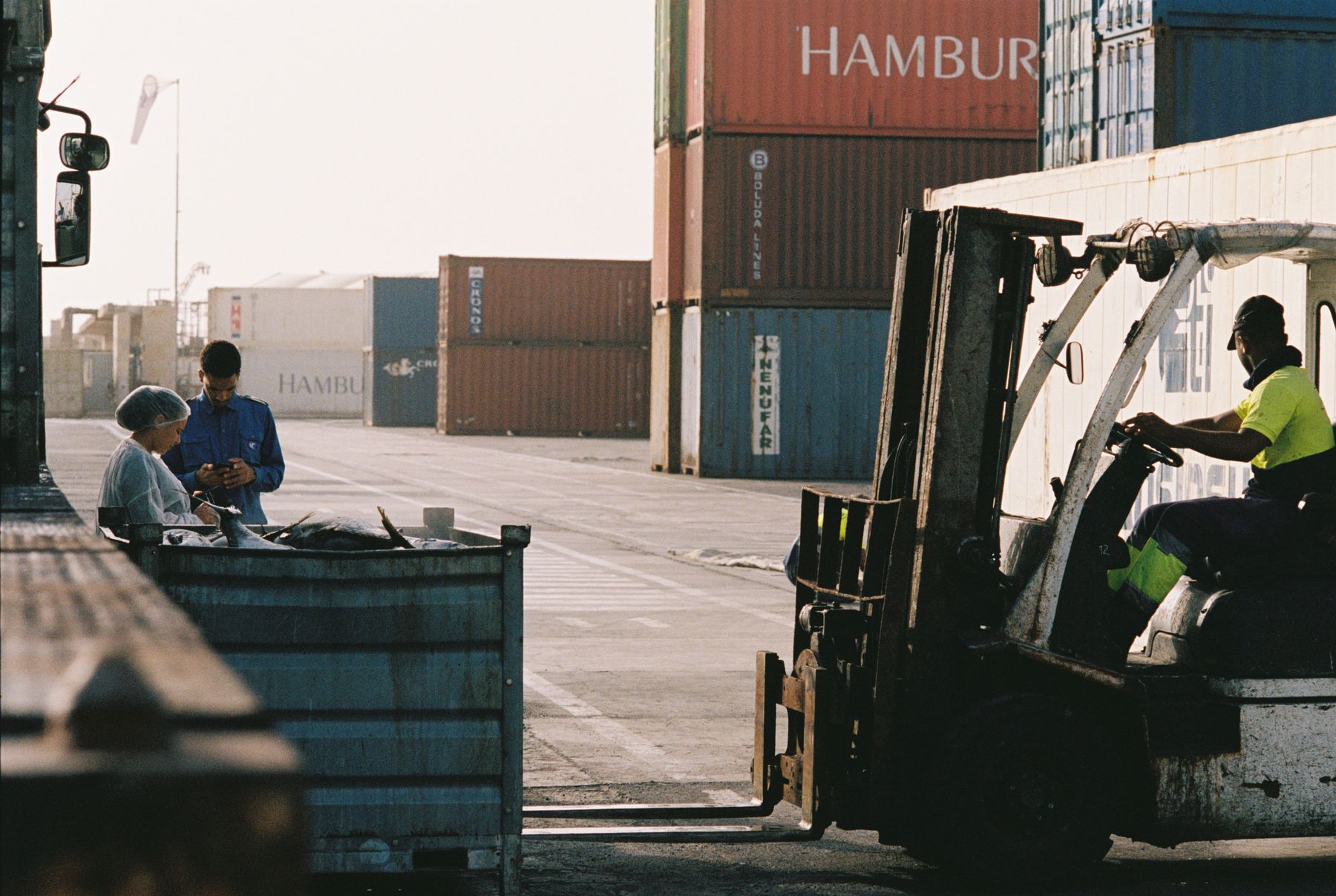
Shipping containers stacked at a container port
From quayside to launch day, one accountable team

Division of labour

Who does what

The split is simple: decisions stay with you, the heavy lifting moves to us.

You keep doing

  • Building the machines and setting the spec
  • Setting prices, margins and commercial policy
  • Owning the brand, the customers and the data
  • Signing off dealers, costs and commitments

We take on

  • Receiving, unloading and machinery warehousing
  • Assembly, PDI and the paper trail for every machine
  • Nationwide delivery, dealer legwork and show stands
  • Parts dispatch, warranty execution and market feedback
You keep the decisions. We carry the machines.

Engagement shapes

Three ways to work with us

From a single trial shipment to full sales outsourcing in the UK.

The pilot

One shipment, worked hard. We land it, prep it, place machines with real users and review the evidence with you around one table. Small commitment, then a decision.

The operations base

Outsourced UK operations without the sales piece: we receive, store, assemble, inspect and deliver while your own people sell. Suits brands that already hold UK orders but need a team, space and a workshop.

Full representation

Operations plus outsourced sales in the UK: we represent your brand to dealers and buyers, market it through the studio and report the pipeline in writing. The nearest thing to a subsidiary without building one.

Fees are agreed in writing before we lift a finger, shaped around the work you actually take. Weighing this route against a distributor or your own subsidiary? The UK market-entry guide compares them honestly.

The commercial model

Monthly, and sized to the season you are actually having

The point of an operating base is that it flexes. Ours is priced so it can.

You are charged monthly for the services and the space you use, and the scope is reviewed as your UK volume moves. A strong spring means more workshop hours and more deliveries, and the invoice says so. A quiet autumn means the opposite. There is no multi-year term to sign, no lengthy notice period buried on page nine, and no penalty for making the arrangement smaller while you work out what Britain wants from your range.

That matters most in the case nobody enjoys discussing. Sometimes a market does not go to plan. If yours does not, you stop, you collect your machines and your parts, and you walk away without a lease to break, staff to make redundant or a company to wind up. Your downside is a few months of service charges instead of years of fixed cost, and that is the whole argument for entering this way.

Charged monthly

Services and space billed month by month for what you actually use, reviewed as your volume changes rather than once a year.

Scale either way

Add workshop hours, storage or representation for a strong season. Take them back out in a slow one, without a renegotiation.

No long tie-in

No multi-year commitment and no lengthy notice, with the break points and the exit written into the agreement from the start.

Straight answers

The questions every export director asks

Plain answers, learned over 30+ years working with international machinery brands.

Who owns the stock in your warehouse?

You do. Machines and parts remain your property while they sit in our warehouse, and the agreement says so in plain words. We are not a distributor: we do not buy your stock, we take no margin on it, and we never stand between you and your customers. Come and count it whenever you like.

Who acts as importer of record?

That is a structuring decision to take with your advisers. A business not established in the UK can only have customs declarations made through an indirect customs representative, who becomes jointly liable for the customs debt (GOV.UK, updated August 2024). Incoterms drive the rest: sell DDP and you, the overseas seller, are the importer of record, which brings a GB EORI number, indirect representation and UK VAT registration with it. Sell DAP or FCA and your UK buyer imports instead. Your assessment maps the options and your advisers confirm the structure.

How does invoicing work?

In your name. You sell the machine and invoice the customer, and the relationship stays yours. Trade Access Partners invoices you separately for the agreed operating work. Worth knowing early: a business with no UK establishment making taxable supplies here must register for UK VAT with no threshold (GOV.UK, updated October 2024), so confirm the setup with your advisers before the first sale is billed.

How long is the contract?

As long as it is useful, and not a day longer. Term and notice are agreed to fit the scope, written in plain English, and free of padlock clauses. We keep manufacturers because their machines are moving, not because a contract traps them.

What happens if we want to leave?

You collect what is yours, which is everything. Stock and parts are your property throughout, dealer and customer relationships sit in your name, and records are handed over in good order. Some brands will outgrow us and build their own operation. Our UK market-entry guide covers when a subsidiary starts to make sense: we would rather be the bridge than the bottleneck.

How fast can we be selling in the UK?

Faster than any route that begins with recruitment or bricks. The base, the workshop and the team already exist, so the long lead items are your sailing time and any gaps in product compliance. The assessment turns that into a dated plan, and the first-shipment checklist shows the paperwork we will ask for before a container is booked.

Who handles warranty work?

Your warranty terms, carried out by our workshop. The fitters who assembled and inspected a machine handle rectification when a claim lands, record the work with photographs and report back to your engineers. Claims get resolved in country, which is how dealer trust survives the first fault.

What about parts?

Parts live in the same building as the machines. We hold the levels you agree, pick and dispatch to dealers and end users, and flag fast movers before they run dry. A machine stood idle for want of a filter loses dealers, so parts get treated as seriously as sales.

Sources: GOV.UK, Getting someone to deal with customs for you (updated 21 August 2024) · GOV.UK, Register for VAT (updated 10 October 2024)

Start here, no commitment

What would a credible UK start look like for your machines?